Flowers everywhere
View into the collection #12

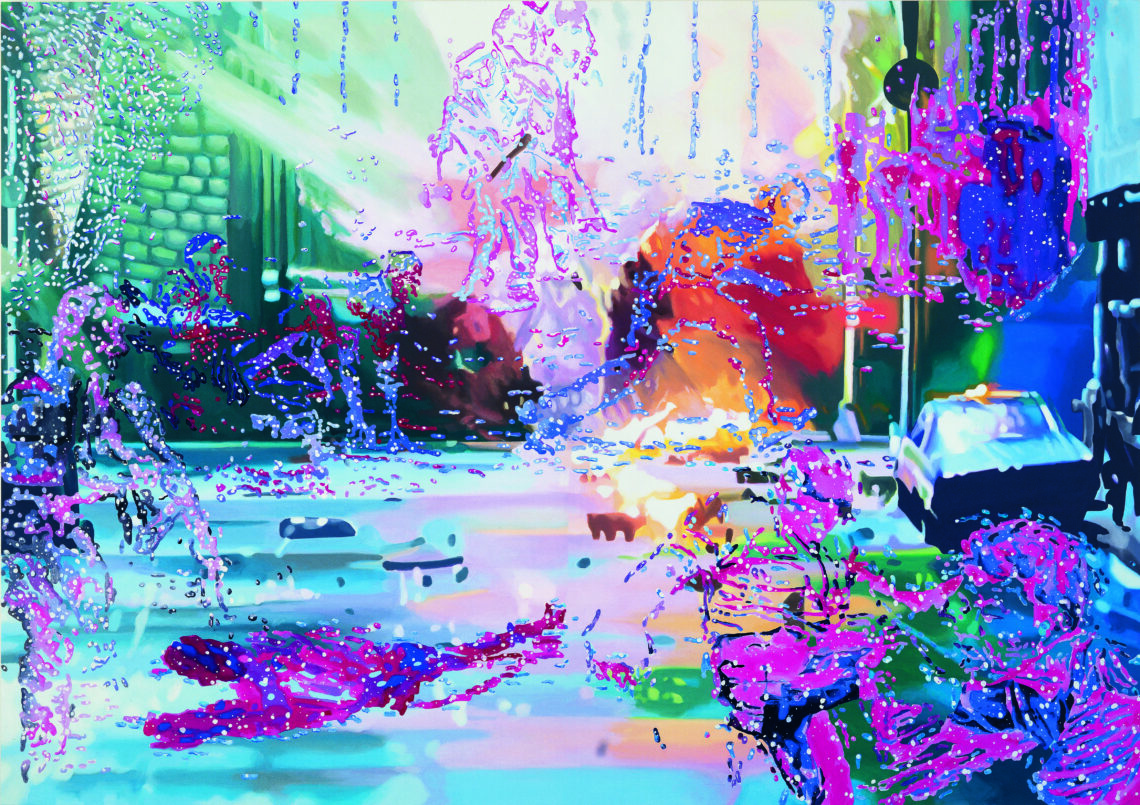
Flowers everywhere: View into the collection #12 is in direct dialog with the exhibition mâcistan by Duane Linklater. Together with the artist, the curators have selected works from the Kunsthalle’s collection in which floral motifs are far more than decorative elements. Based on Linklater’s artistic examination of history, collecting and colonial entanglements, this view into the collection focuses on flowers as carriers of memory, exchange and resistance. They point to relationships between Europe and North America, between museum and community, between past and present.
European expansion: Trade and Power
In the 18th and 19th century, the European fur trade reached what is now Canada and and the surrounding regions. Yet this trade was far from equal. It took place at a time when European powers were expanding their rule and consolidating colonial structures.
For many Indigenous communities, this meant loss, displacement, and oppression. They were deprived of the lands on which they lived and worked. They were economically exploited and politically disenfranchised by European powers. Their traditional ways of life were systematically pushed aside, and practices passed down over generations were banned and criminalized. Children were taken away from their families. This targeted destruction of social structures and the violence that accompanied it led to massive population losses in many regions. Today, these developments are understood as a form of genocide—that is, the systematic destruction of communities.
Floral Patterns as Cultural Translation
Duane Linklater is a member of Moose Cree First Nation. This Indigenous community has its homeland primarily in the southern James Bay region of present-day Canada. For the Moose Cree, a new trading relationship offered Indigenous artists opportunities to articulate new motifs and with new materials.
With the European fur trade came new goods such as glass beads, textiles, and floral patterns—motifs that had long been widespread in Europe. Moose Cree artists took up these new materials and made them their own. Floral motifs were not simply adopted but continued and reimagined. In beadwork, European glass beads intertwined with Indigenous knowledge, with memories, and with relationships to the land and to ancestors. These new floral patterns became a powerful sign of deeply rooted cultural identity. They speak of exchange and colonial history—but also of resilience, creativity, and continuity.
Artists: Yto Barrada, Heinrich Campendonk, Albrecht Dürer, Max Ernst, Fischli Weiss, Annette Kelm, Anselm Kiefer, Konrad Lueg, August Macke, Goshka Macuga, Germaine Richier, Christian Rohlfs, Hermann Stenner and others
Gallerie