Yael Bartana. Mir Zaynen Do!

How does community emerge? And what connects people across time, place, and diverse experiences?
Songs, dances, rituals, and language carry these connections: they preserve memories, convey experiences, and create moments of coming together.
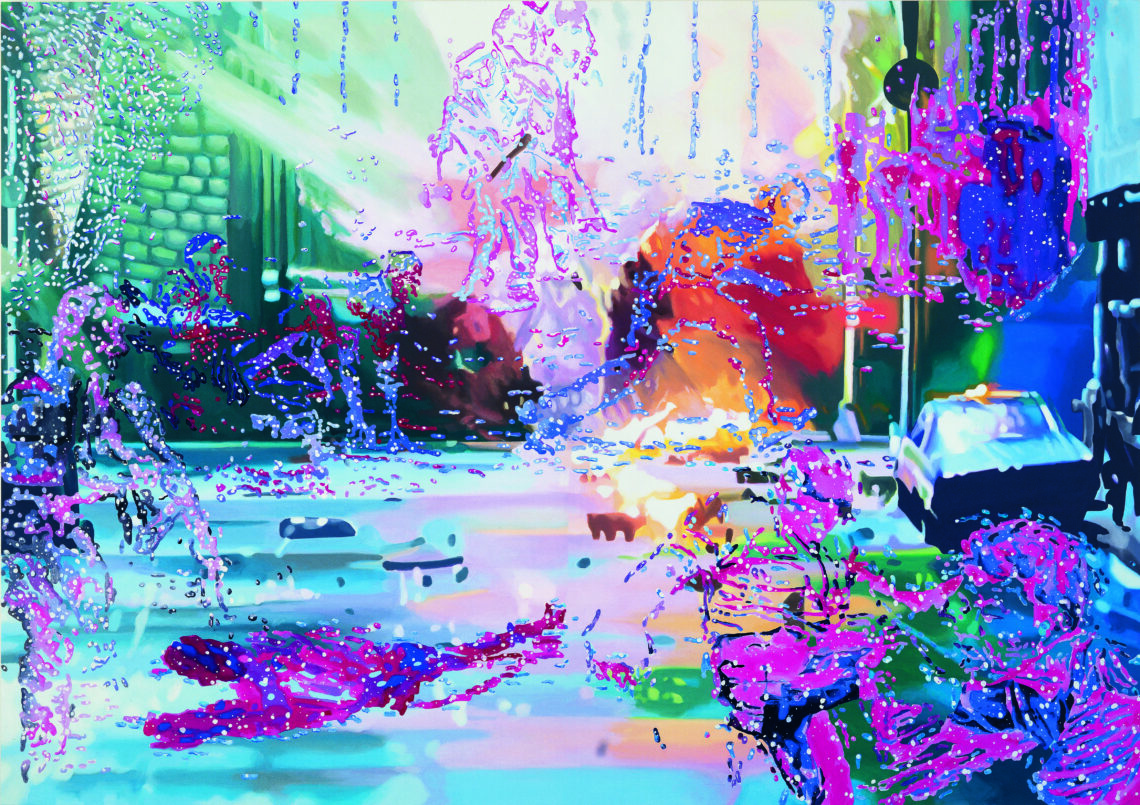
At the center of the exhibition is Yael Bartana’s video and sound installation Mir Zaynen Do! (2024). Im Mittelpunkt der Ausstellung steht Yael Bartanas Video- und Klanginstallation Mir Zaynen Do! (2024). The Yiddish title—“We Are Here!”—refers to a song of Jewish resistance during the Second World War. In Bartana’s work, two ensembles with different diaspora backgrounds come together in São Paulo – communities that have emerged from experiences of uprooting and carry on their cultural traditions far from their origins: Coral Tradição, a Jewish-Brazilian choir, and Ilú Obá De Min, an Afro-Brazilian street music ensemble. Its members are descendants of Maroons—people who escaped enslavement. Their voices, rhythms, and movements intertwine to form a living community: quiet and meditative, loud and powerful.
The performance is conducted by 97-year-old choir director Hugueta Sendacz In the ruins of the Teatro de Arte Israelita Brasileiro, Bartana focuses on the collective now: on listening, togetherness and shared presence. Mir Zaynen Do! shows this moment of collective presence – community is created through shared action.
Yael Bartana (*1970, Kfar Yehezkel, Israel; lives and works in Berlin and Amsterdam) works with film, video, photography, performance, and installation. Her work has been exhibited internationally, including at MoMA PS1, New York; the Stedelijk Museum, Amsterdam; the Jewish Museum Berlin; and the Venice Biennale. She has received numerous awards, among them the Artes Mundi 4 Prize (2010) and the Rome Prize at the German Academy Villa Massimo (2023/24). Her trilogy And Europe Will Be Stunned was described by The Guardian as one of the most important artworks of the 21st century.